What Demand Charges Actually Measure
Demand Charge Definition
A demand charge is the portion of a commercial electricity bill based on the highest level of power a facility draws from the electric grid during a billing period. Utilities measure this peak level of demand in kilowatts over a defined interval, commonly fifteen or thirty minutes, and use that value to determine the demand charge applied to the entire billing cycle.
Unlike energy charges, which depend on the total electricity consumed over time in kilowatt hours, demand charges depend on the maximum rate at which electricity is drawn from the system. The single highest interval establishes the billed demand for the month. Demand charges are therefore determined by peak demand, the highest level of power a facility draws during the billing period.
How Demand Charges Are Calculated in Electric Tariffs
Demand charges are determined by identifying the highest level of electrical power drawn during a defined billing interval within the billing period. Utilities typically measure demand in kilowatts using interval meters that record usage every fifteen or thirty minutes.
Each interval measurement represents the rate at which electricity was being consumed during that period. At the end of the billing cycle, the highest recorded interval becomes the billed demand value.
Once that peak interval is recorded, it establishes the demand charge for the entire billing period regardless of how electricity use behaves before or after the peak occurs.
This structure reflects how electric systems must be built and operated. The grid must maintain sufficient generation, transmission, and distribution capacity to supply the highest level of demand that customers may place on the system at any moment.
Demand charges therefore correspond to the level of electrical capacity the grid must hold ready to serve a facility’s maximum load, rather than the total amount of electricity consumed over the billing cycle. Understanding how a single interval becomes the billed demand is easier to see with a real example.
Example: How a Single Interval Sets the Demand Charge
The demand charge on a commercial electricity bill is determined by the single highest demand interval recorded during the billing cycle. The example below shows how that value appears both in the meter data and on the final electricity bill.
First, the billed demand value appears on the delivery portion of the bill.
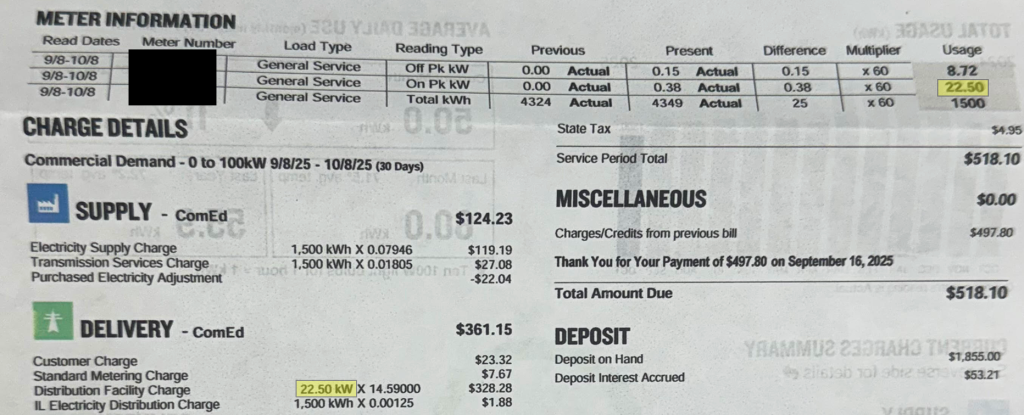
In this example the billed demand is 22.50 kW. This number determines the demand portion of the electricity bill for the entire billing period.
The value comes directly from the interval meter data recorded throughout the month.
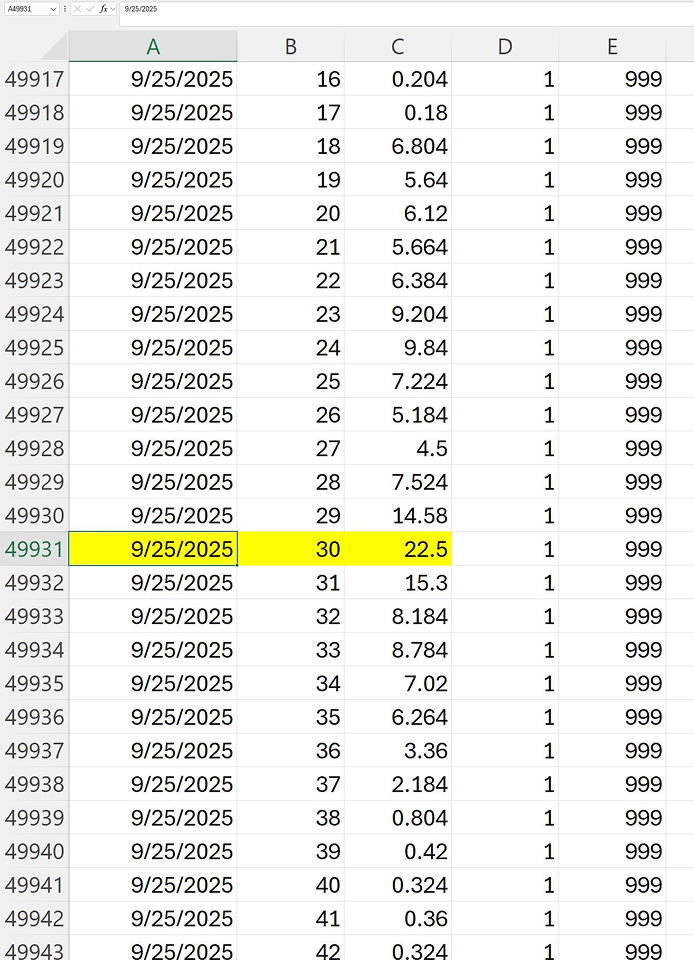
Each row represents a measured demand interval. Most intervals remain relatively stable, but one interval exceeds all others.
September 25
Interval 30
Demand = 22.5 kW
Because this is the highest recorded demand during the billing period, it becomes the billed demand used to calculate the demand charge.
The same event becomes easier to understand when the interval data is visualized as a load profile.
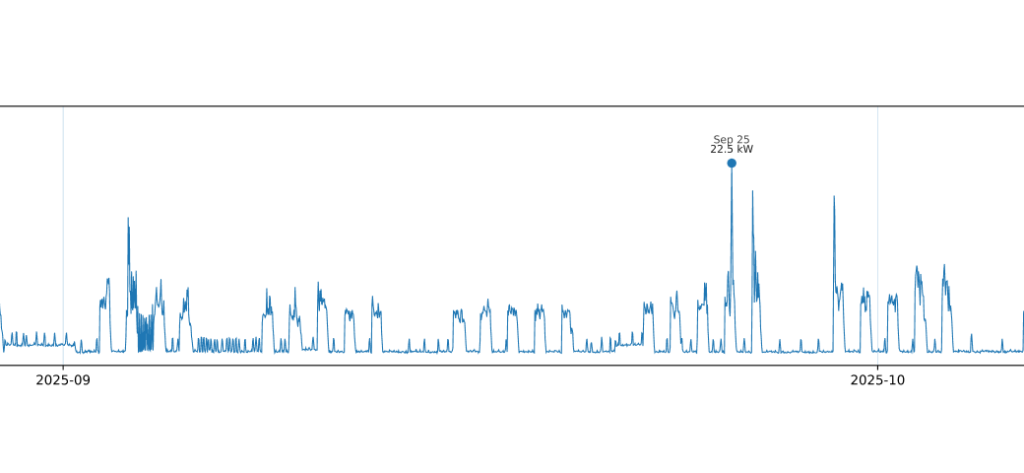
The spike visible on September 25 represents the moment the facility drew its highest level of power during the billing period. Once this peak occurs, it defines the level of electrical capacity the grid must be prepared to supply.
The demand charge is therefore calculated from the maximum demand interval rather than from the average level of electricity consumption over the month.
Even if electricity usage remains lower for the rest of the billing period, the single highest interval determines the capacity the grid must maintain and therefore establishes the demand charge.
“Demand charges reflect the level of capacity the grid must maintain to ensure reliability, not the volume of electricity ultimately consumed.”
Why Energy Usage Alone Does Not Explain Demand Charges
Electricity costs are often assumed to scale primarily with total energy consumption over the course of a billing cycle. That assumption does not hold for demand charges.
Energy consumption is measured in kilowatt hours and represents the total amount of electricity used over time. Demand charges, by contrast, are based on instantaneous power demand measured in kilowatts. The two measurements describe different characteristics of electricity use.
A facility can consume relatively modest amounts of energy over the course of a month and still incur a high demand charge if one short interval produces a large spike in electrical load. That spike establishes the level of demand the grid must be capable of serving.
Once the highest demand interval is recorded, the duration of that event no longer matters. A single fifteen minute spike can determine the demand charge even if electricity usage remains lower for the rest of the billing period.
This occurs because electric infrastructure must be designed to reliably supply the highest level of demand that may occur at any moment. Generation, transmission, and distribution systems must all maintain sufficient capacity to deliver that peak level of power whenever it arises.
Demand charges therefore reflect the capacity the electric grid must maintain to ensure reliability, rather than the total volume of electricity ultimately consumed.
Why a Single Interval Can Dominate a Monthly Bill
Demand charges are set by the maximum measured demand interval during the billing period. Once that interval is recorded, it establishes the billed demand value regardless of how electricity usage behaves before or after the peak occurs.
This structure often appears disproportionate because a brief overlap of electrical loads can outweigh weeks of otherwise stable operation. A short period in which several pieces of equipment operate simultaneously can create a spike in demand that becomes the defining value for the entire billing cycle.
Unlike energy consumption, which accumulates gradually over time, demand charges are determined by extremes. The grid must be capable of supplying the highest level of demand that occurs at any moment, even if that level is reached only briefly.
As a result, duration does not influence the demand charge once the peak interval has occurred. The charge reflects the capacity the electric system must be prepared to deliver rather than the persistence of electricity usage.
What often surprises facility operators is that the event producing the peak demand may last only a few minutes. Once that interval establishes the maximum demand, it determines the demand charge applied for the entire billing period.
What Evidence Would Distinguish Between These Explanations
Once the billed demand value is identified, the next step is determining what produced the peak demand interval that set the charge.
If a true coincident peak occurred, one or more intervals in the meter data will show demand materially higher than the facility’s typical operating level. This indicates that equipment loads overlapped or ramped simultaneously during a short period of time.
If tariff rules are dominant, the billed demand may correspond to defined peak windows or seasonal demand definitions rather than to unusual facility behavior. In these cases the charge reflects how the tariff defines billable demand rather than an isolated operational event.
If interval aggregation is involved, short duration spikes may be partially hidden within the meter’s recording interval. Demand may appear relatively stable in averaged data even though brief spikes occurred inside the measurement window.
Distinguishing between these explanations requires three pieces of information: the billed demand value, the interval definition used by the tariff, and the interval level demand data recorded by the meter.
Once those elements are examined together, the source of the demand charge can usually be traced to the specific interval that established the peak demand for the billing cycle.