How to Identify a Commercial Electricity Bill (Demand Charges, kW, kWh)
How to Identify a Commercial Electricity Bill
A commercial electricity bill can be identified by three structural features that rarely appear on residential electricity bills: a demand charge measured in kilowatts (kW), a nonresidential delivery class such as Small Load or Large Load, and separate sections for electricity supply and electricity delivery.
Demand charge (kW)
Commercial bills include a demand charge based on the highest level of electricity demand recorded during the billing period. The charge is typically calculated as peak demand (kW) multiplied by a demand rate ($/kW). Residential electricity bills do not include demand charges and only bill for energy usage in kilowatt hours (kWh).
Nonresidential delivery class
Commercial accounts are usually assigned a delivery class such as Small Load, Medium Load, or Large Load. Utilities use these classes to categorize facilities according to their peak electrical demand.
Separate supply and delivery charges
Commercial electricity bills usually separate the cost of electricity supply from the cost of delivery through the utility grid. Supply represents the cost of purchasing electricity from a supplier, while delivery represents the cost of transporting electricity and maintaining the grid infrastructure.
If a bill includes a demand charge based on peak demand and separates supply and delivery charges, it is almost always a commercial electricity account.
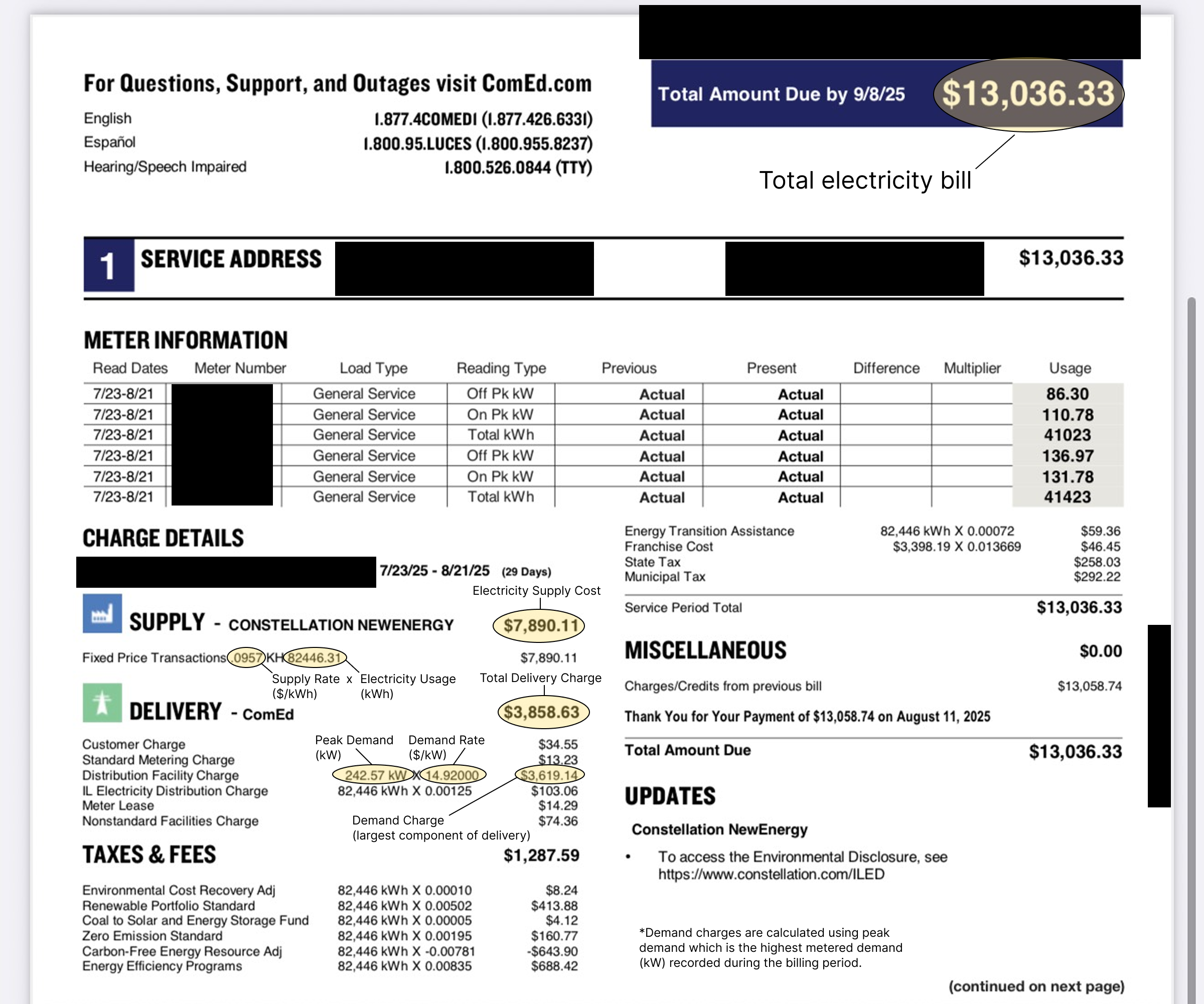
The annotated bill above highlights the variables that determine most commercial electricity costs.
Example of a Commercial Electricity Bill
Identifying a commercial electricity bill begins with understanding the two major components that determine most electricity costs: electricity supply and electricity delivery.
Supply represents the cost of purchasing electricity from the supplier. It is calculated by multiplying total electricity usage, measured in kilowatt hours (kWh), by the electricity supply rate.
Supply cost = electricity usage (kWh) × supply rate ($/kWh)
In the example bill shown above, the electricity supply rate is $0.0957 per kWh and total electricity usage for the billing period is 82,446.31 kWh.
82,446.31 kWh × $0.0957 = $7,890.11
This produces a supply cost of $7,890.11, which represents the portion of the bill associated with purchasing electricity.
Delivery represents the cost of transporting electricity through the utility grid and maintaining the infrastructure required to serve the facility. Delivery charges typically include a demand charge based on peak power demand. Delivery charges are explained in detail in the article on why electricity delivery charges can be high.
Demand charge ($) = peak demand (kW) × demand rate ($/kW).
Demand charges are explained in more detail in the article on what a demand charge is and how utilities calculate it.
Peak demand is the highest metered power demand recorded during the billing period. Even if that level of demand occurs only briefly, the electrical grid must be capable of supplying it.
In this example, the facility has two meters contributing to the total peak demand.
Meter 1 peak demand: 110.78 kW
Meter 2 peak demand: 131.78 kW
Total peak demand is calculated as:
110.78 kW + 131.78 kW = 242.57 kW
The demand charge is calculated using a demand rate of $14.92 per kW.
242.57 kW × $14.92 = $3,619.14
This produces a demand charge of $3,619.14, which represents more than 90 percent of the delivery portion of the bill.
“The grid must be built to serve your highest demand, not your average usage.”
How Utilities Measure Peak Demand
Utilities determine peak demand by identifying the highest level of electrical power a facility draws from the grid during the billing period. This value is measured in kilowatts using interval meters that record electricity usage throughout the day.
Demand is measured in kilowatts (kW), which represent the rate at which electricity is being used at a specific moment. This differs from electricity usage, which accumulates over time and is measured in kilowatt hours (kWh).
Why Electricity Bills Alone Cannot Explain Your Costs
Electricity bills summarize the final billing determinants, but they do not show how electricity demand changes throughout the day.
The bill shows the total electricity usage and the highest recorded demand, but it does not reveal when that demand occurred or what equipment was operating at the time.
For example, the bill may show a peak demand of 242 kW, but it does not explain whether that demand occurred during normal operating hours, during equipment startup, or during a brief spike in electricity usage.
Interval meter data provides a more detailed view by recording electricity demand at regular intervals throughout the day.
By analyzing interval data, building operators can identify when peak demand occurs, which systems are contributing to demand spikes, and whether electricity usage patterns can be adjusted to reduce demand charges.
Without this additional data, the electricity bill alone provides only a partial explanation of electricity costs.
Frequently Asked Questions
What is the difference between kW and kWh on an electricity bill
Kilowatts (kW) measure the rate at which electricity is being used at a given moment. Kilowatt hours (kWh) measure the total amount of electricity used over time. Supply charges on commercial electricity bills are based on kWh, while demand charges are based on kW.
What information appears on a commercial electricity bill
A commercial electricity bill typically includes electricity usage (kWh), peak demand (kW), supply charges, delivery charges, meter information, and taxes or regulatory fees. These values determine how the total electricity cost for the billing period is calculated.
How do you read electricity usage in kWh on a bill
Electricity usage in kWh represents the total amount of energy consumed during the billing period. This number is multiplied by the electricity supply rate to calculate the supply portion of the electricity bill.
What is load factor on an electricity bill?
Load factor measures how consistently a facility uses electricity relative to its peak demand. Buildings with a low load factor have short periods of very high demand compared to their average electricity use, which can increase demand charges. Learn more in our guide to load factor and how it affects electricity costs.