What Is a Demand Charge on an Electricity Bill?
What a Demand Charge Is
A demand charge on an electricity bill is a fee based on the highest rate at which a facility draws power from the grid during a billing period. Unlike energy charges, which depend on the total electricity consumed over time in kilowatt hours, demand charges are based on peak power demand measured in kilowatts.
Utilities include demand charges to recover part of the cost of maintaining electrical infrastructure capable of serving a customer’s maximum load. Substations, transformers, feeders, and other distribution equipment must be sized to deliver the highest level of power a facility might require at any moment, even if that level is reached only briefly.
Because this infrastructure must always be available, commercial customers are billed not only for the electricity they consume but also for the maximum power level their operations require during the billing cycle.
How Utilities Calculate Demand Charges
Demand charges are calculated using interval demand measurements recorded by the electric meter. Most commercial meters measure average power demand over 15 minute intervals.
At the end of the billing cycle, the utility identifies the interval with the highest average demand and uses that value as the billing demand.
The basic calculation is:
Demand Charge = Peak Interval Demand (kW) × Demand Rate ($ per kW)
In many tariffs, customers served at primary voltage may face lower demand rates than customers served at secondary voltage because primary service customers require less distribution infrastructure and fewer transformation stages.
Why a Single Peak Can Set the Monthly Demand Charge
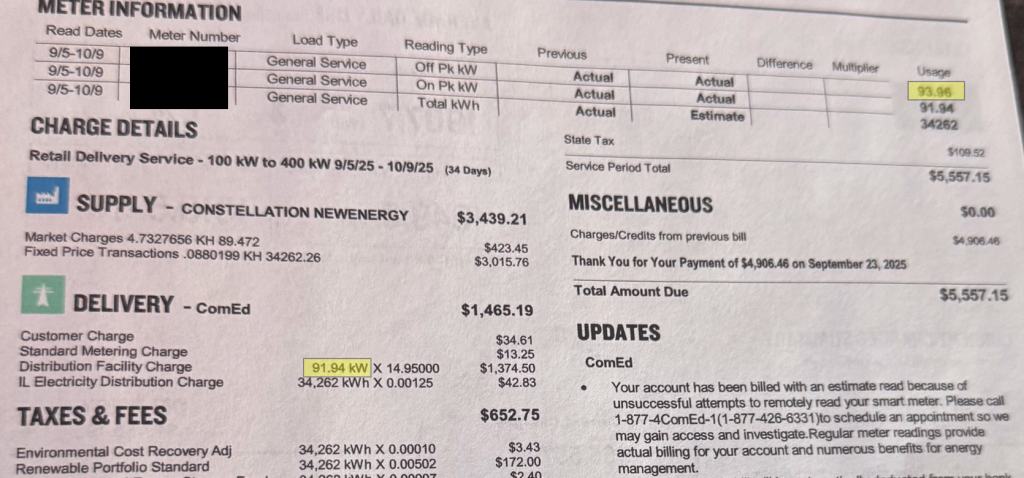
To understand how demand charges work in practice, it helps to follow the trail from the utility bill back to the underlying meter data. In the example below, the commercial electricity bill shows a billed demand of 91.94 kW. That single number is used to calculate the demand charge for the entire billing period. The rest of the analysis simply involves identifying where that value came from in the facility’s interval meter data.
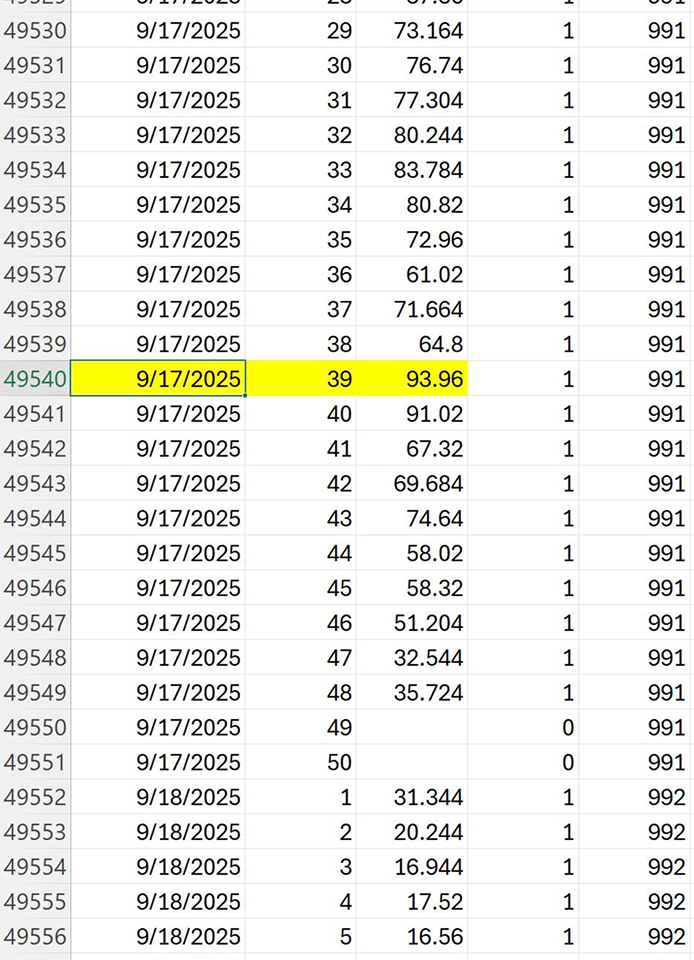
Electric utilities determine demand charges using interval meters that record the facility’s load throughout the billing cycle. By examining the interval data, we can locate the exact moment when the facility reached its highest recorded demand during the billing period. In this case, the interval data shows a peak of 93.96 kW occurring on September 17. This single interval becomes the key data point used to determine the billing demand.
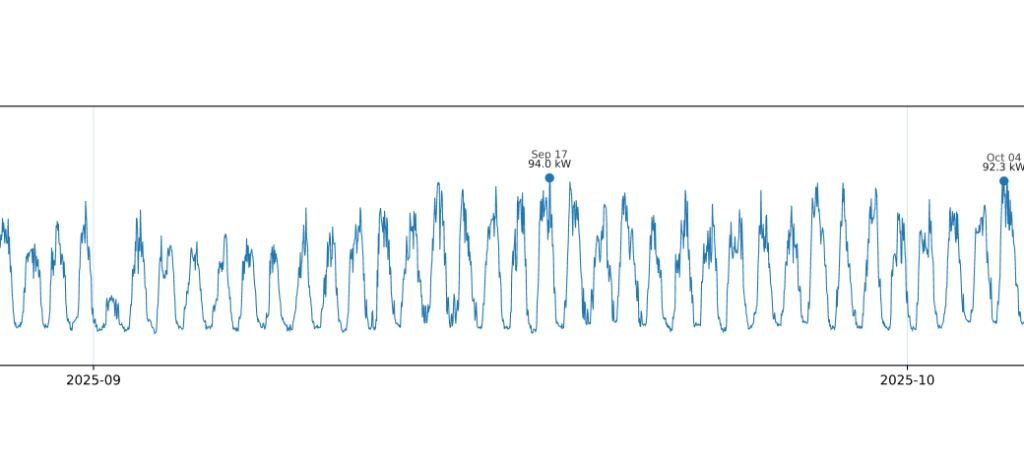
When the interval data is plotted across the full billing period, the pattern becomes clear. The facility operates with a repeating daily load cycle, but one short spike rises above the rest of the load profile. Demand charges are determined by this peak interval rather than the average load across the month. Even though the facility spends most of its time operating at much lower levels, that brief spike establishes the demand level used to calculate the monthly demand charge.
“You don’t pay for how much electricity you use. You pay for the single moment you use the most.”
Where Demand Charges Appear on a Commercial Electricity Bill
Demand charges typically appear in the delivery or distribution section of a commercial electricity bill. They are usually listed as a separate line item showing the billing demand in kilowatts, the demand rate in dollars per kilowatt, and the resulting charge.
Common labels include demand charge, billing demand, peak demand, or distribution demand.
Why Demand Charges Are Often Higher Than Expected
Demand charges often surprise facility operators because they are driven by short operational events rather than total energy usage. When multiple systems operate simultaneously, their combined load can produce a peak demand significantly higher than normal operating levels.
Without access to interval meter data, many businesses cannot easily identify when these peaks occur. As a result, a short spike lasting only a few minutes can determine a large portion of the monthly electricity bill.
If your goal is to position Phantom Grid as a diagnostic platform, the next section after this should introduce interval data visibility. That transition sets up the argument that identifying and controlling peak intervals is the key to reducing demand charges.
Frequently Asked Questions
How is demand charge calculated on an electricity bill?
Utilities calculate demand charges by measuring the highest average power draw recorded during a short interval within the billing cycle. Most commercial meters measure demand in 15 minute intervals.
During each interval, the meter calculates the average kilowatt load. At the end of the billing period, the utility identifies the interval with the highest demand and uses that value as the billing demand.
The calculation is typically:
Demand Charge = Peak Demand (kW) × Demand Rate ($ per kW)
For example, if a facility reaches a peak demand of 120 kW and the tariff demand rate is $18 per kW, the demand charge would be:
120 × 18 = $2,160
Some tariffs also include demand ratchets or coincident peak mechanisms that can increase the billed demand based on historical or system peak demand conditions.
Why are demand charges so expensive for businesses?
Demand charges are expensive because they recover the cost of infrastructure that must be sized for peak load rather than total energy usage. Utilities must maintain transformers, feeders, substations, and generation capacity capable of delivering the highest power level a customer might require at any moment.
Commercial and industrial facilities often operate equipment that draws large amounts of power for short periods. Examples include compressors, industrial motors, HVAC systems, ovens, or production machinery. When several pieces of equipment operate simultaneously, they can create short spikes in load that establish the billing demand.
Because the demand charge is based on the single highest interval during the billing cycle, even a brief spike can determine the charge for the entire month. This makes demand costs highly sensitive to operational timing rather than total electricity consumption.
Do residential electricity bills include demand charges?
Most residential electricity tariffs do not include demand charges. Residential customers are typically billed only for energy consumption measured in kilowatt hours.
Demand charges are primarily applied to commercial and industrial customers because their loads are large enough to affect grid capacity planning and infrastructure sizing.
However, some utilities have begun testing residential demand tariffs, particularly in areas with high adoption of electric vehicles, electric heating, or distributed energy resources. These tariffs attempt to manage peak grid demand by charging households based on their highest short interval power usage.